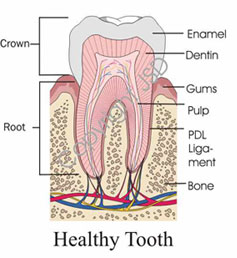
 Root canal treatment requires removing the nerve tissue and other tissues (called the pulp) from inside the tooth and its root(s). A local anesthetic will be given, and then a sheet called the "rubber dam" will be placed around the tooth to keep it clean and dry during treatment. An opening is made through the chewing surface of the tooth to gain access to the tooth’s pulp. The contents of the root canals are removed and the canals are cleaned and shaped. The canals are then filled and sealed with a biologically compatible material called gutta percha. After root canal treatment, a temporary filling is placed and the tooth will then require timely placement of a final restoration (permanent filling and crown) to return it to proper function.
Treatment provided in this practice is performed in accordance with accepted clinical methods as described by both the American Association of Endodontists and the American Dental Association. A number of radiographs will be necessary to complete the root canal procedure, and will vary depending upon the complexity of the case. Additionally, the number of office visits required to complete treatment depends upon the diagnosis and complexity of each tooth; however, routine root canal treatment can generally be completed in one or two appointments. It is our philosophy that it is more important to provide the utmost in patient care than to meet a specific time criteria.
There are, of course, no guarantees. Root canal or endodontic therapy generally has a very high degree of success. Teeth that can be treated near ideal have a success rate up to ninety percent; however, the success rate depends upon the individual circumstances associated with the tooth prior to treatment. We will discuss the prognosis and expected degree of success before any endodontic procedure to help you make an informed decision.


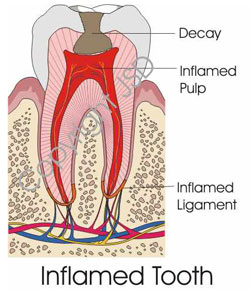 Oral pain such as toothaches or cracked / fractured teeth can often be difficult to pinpoint. Because of the vast network of nerves in the mouth, the pain of a damaged or diseased tooth is often felt in another tooth and/or in the head, neck, or ear. An endodontist is a specialist trained in diagnosing and treating this type of pain. The recommendation for treatment is based on visual and radiographic examination, as well as other diagnostic tests performed by the endodontist. Root canal treatment is often necessary because of pain, infection, decay, broken/fractured teeth as well as other extenuating factors. The intended benefit of root canal treatment is to relieve the current symptoms and/or to permit the continuation of any additional treatment the general dentist has proposed. Root canal treatment allows for the retention of the tooth and its root in the mouth, thereby permitting the tooth to be restored to function. .